My newest toy: A microscope!

After my postponed birthday party this weekend, I was one microscope richer. A friend of mine hadn’t used his microscope for a while and decided it would be a kick-ass birthday gift. Well he’s right…. it is!

Firstly, I cut off the tiniest bit of a Brassia orchid leaf and stuck it between a glass slide and cover. I found it hard to keep my eye at a steady distance, so I fitted a rubber eye shield which I had left from an old telescope eyepiece. This also improved sight, because it shields light from outside obviously.

I think you can guess what I fitted to the microscope next…. yep: my camera! My telescope adapter fits almost perfectly.

As the depth of focus of the microscope is not very deep, I have to make multiple photos with different heights of the object in focus and stack them. For this I used photoshop and I was quite surprised with the result.
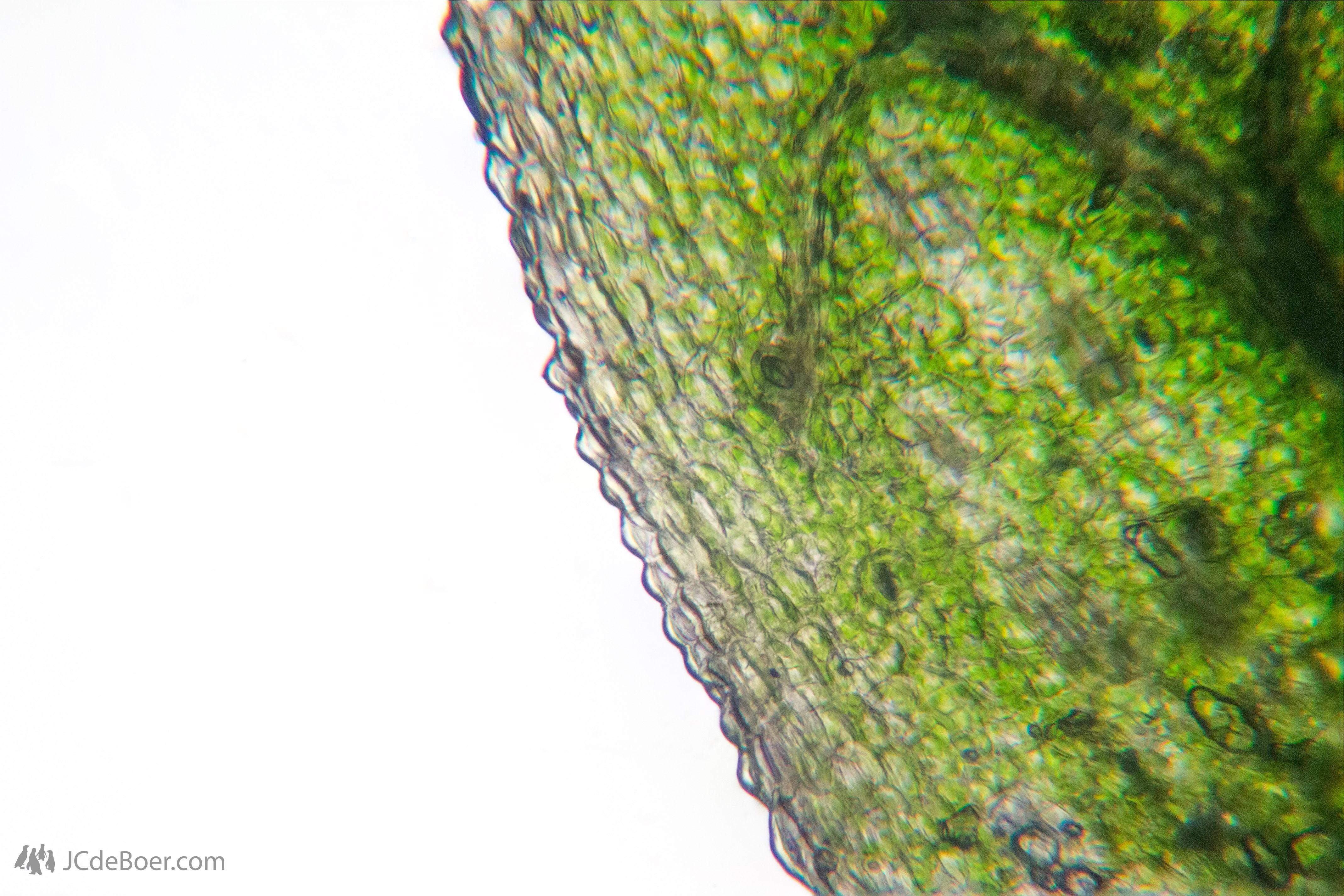
Leaf of a Brassia orchid. This is a stack of photos taken with different regions in focus.

Leaf of a Brassia orchid. This is a stack of photos taken with different regions in focus.

I heard that liquor also looks awesome through a microscope, so I took a droplet of absinthe. As might have been expected, nothing special, just transparency. Some crystallized absinthe (mostly sugar) that I scraped off the bottle gave better results, although I think there definitely are alcoholic beverages that look even better.

Crystallized absinthe, scraped from the bottle opening. B/W stack

Crystallized absinthe, scraped from the bottle opening. B/W stack

While searching the house for other food and beverages that may look awesome when magnified, I decided to have a coffee and came across some roasted, ground coffee beans of which I sprinkled some on a glass slide. Making photos at all different focal depths was quite a hastle, but it sure was worth it. Here’s what you use to make your morning coffee 😛

Microscopic photo of roasted ground coffee beans for making filter coffee.

Microscopic photo of roasted ground coffee beans for making filter coffee.

When I was busy putting chalk between glass, I didn’t think about the fact that it will stick to both the glass slide and the cover glass. So it turned out different from what I expected.

Stacked photos of chalk sticking to the glass slide and the cover glass.

Stacked photos of chalk sticking to the glass slide and the cover glass.

You may have noticed that further away from the center of the photos, the blue and red channels are somewhat misaligned. I will try to use single channels to get rid of this and get sharper images, albeit in black and white.

I sure had fun while toying around with the microscope and camera and it probably wont be long until I post my next photos 😉

Then I would like to share another evening sky photo with you. Moist air isn’t very astronomer-friendly, but there’s no denying that it makes some lovely evening pictures.
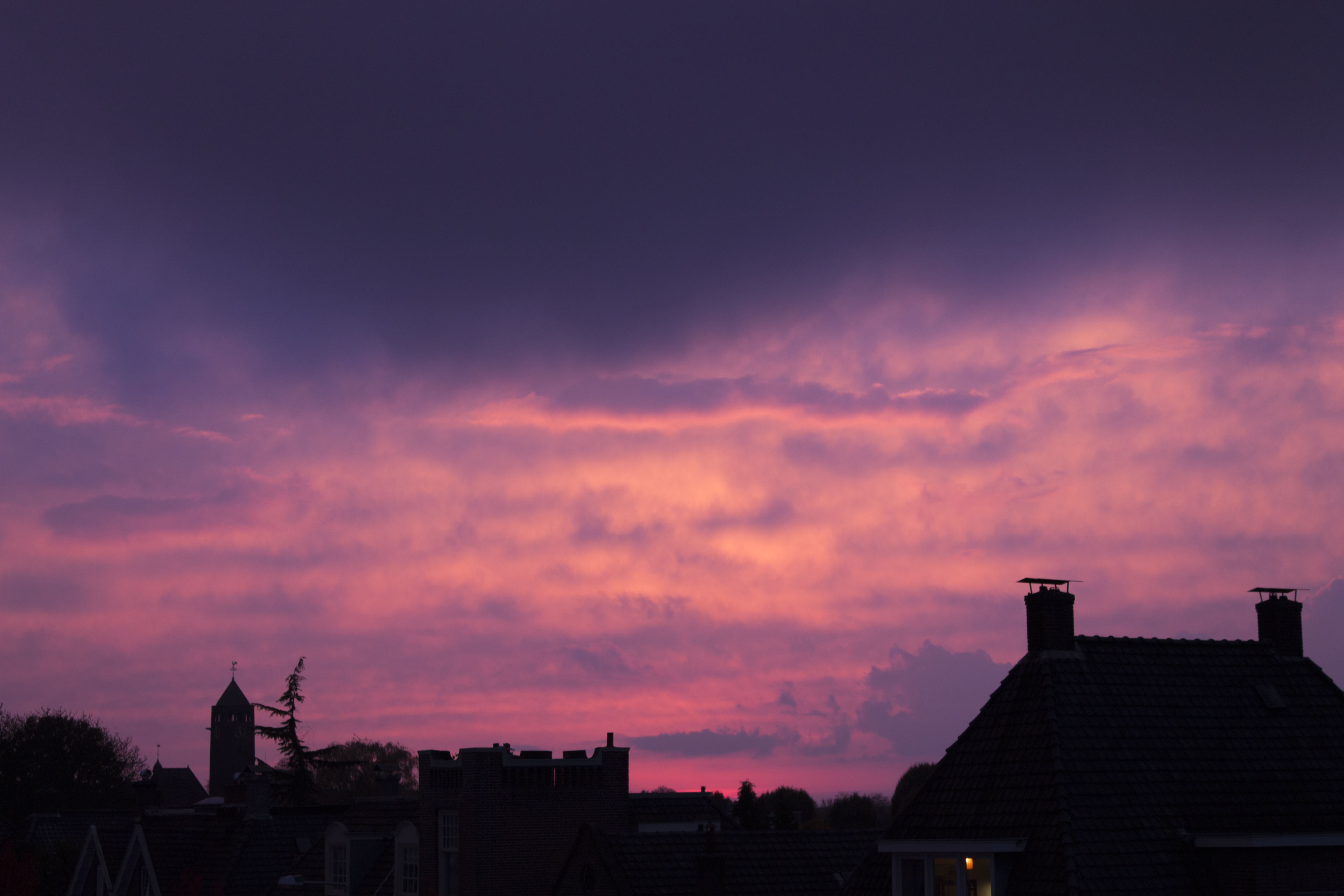
Another nice evening sky

Another nice evening sky

While typing this, I have my telescope up and running outside and am waiting for the Horsehead and Flame nebula to rise a little further above the horizon. There currently are faint clouds in front of it. I already shot some cool photos of the Dumbbell Nebula which I will probably post tomorrow 🙂

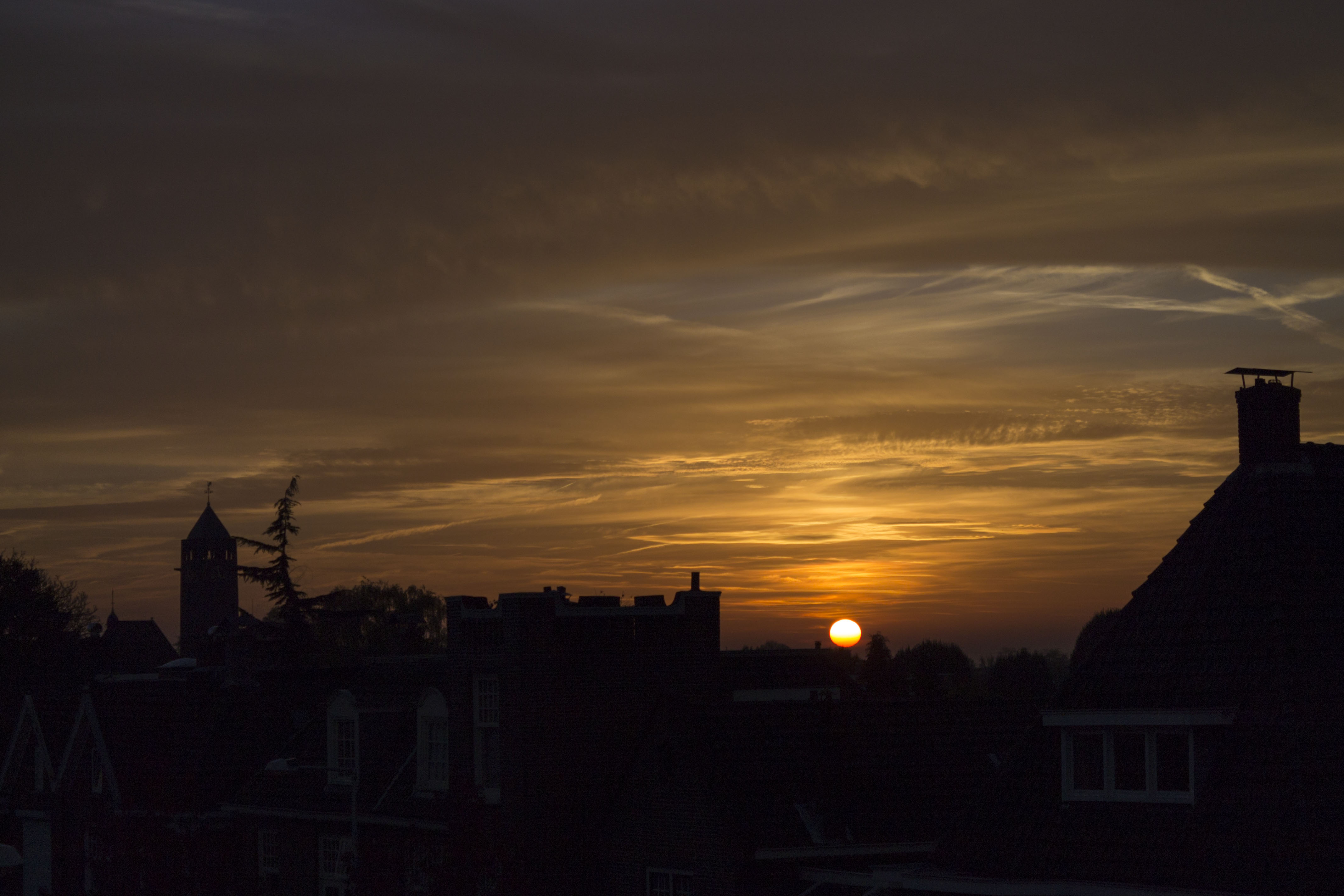
Beautiful sunset and different types of nebulosity

After I finished my exams, I grabbed the first opportunity to get my camera out and shoot some pretty pictures. The icy sky in combination with the low sun friday evening, provided beautiful views. I tried to photograph them as best as I could:

Sun dog due to icy skies

Sun dog due to icy skies

Sunset over Enschede

Sunset over Enschede

The Enschede sky, shortly after sunset

The Enschede sky, shortly after sunset

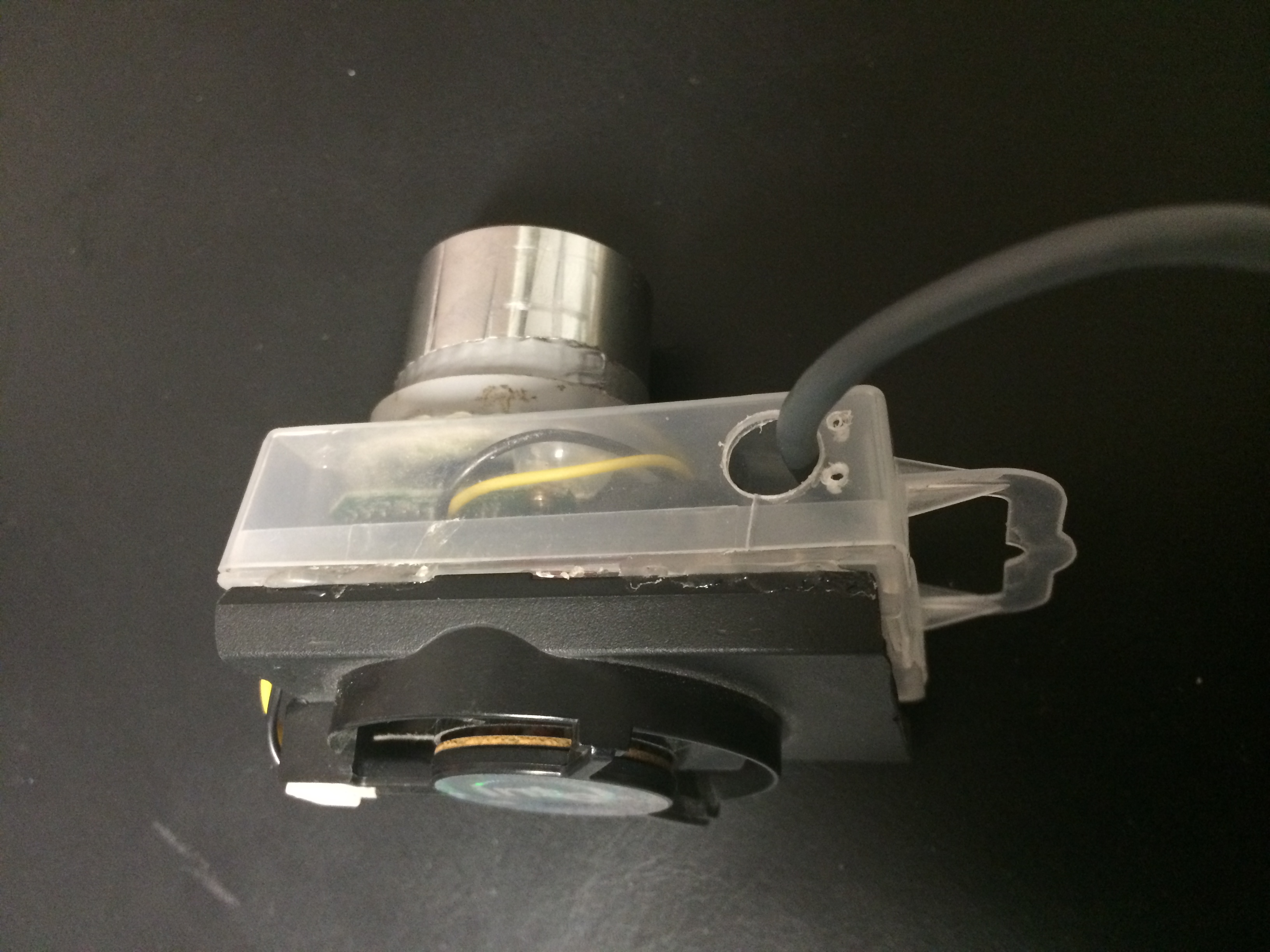
Later that evening, I took my telescope out, including new mount, motors and feedback-loop guiding system. I never had the chance to use it before and I couldn’t wait to give it a try. The skies were definately not clear (a thin layer of clouds was still blocking light from the lower magnitude stars), but nontheless my guidecamera (my DIY xbox camera) managed to pick up some stars after playing with the settings for a while.

Modded xbox cam from side

Modded xbox cam from side

The idea is, to have two telescope tubes aligned and both fitted with cameras. One camera functions as a guide camera and has the sole purpose of showing stars on the computer screen. The computer then sends signals to the motorized telescope to keep a selected star exactly at the same place on the computer screen. Since the two tubes are aligned, the second telescope – fitted with a proper imaging camera – has a perfectly steady image to photograph at long exposure times.

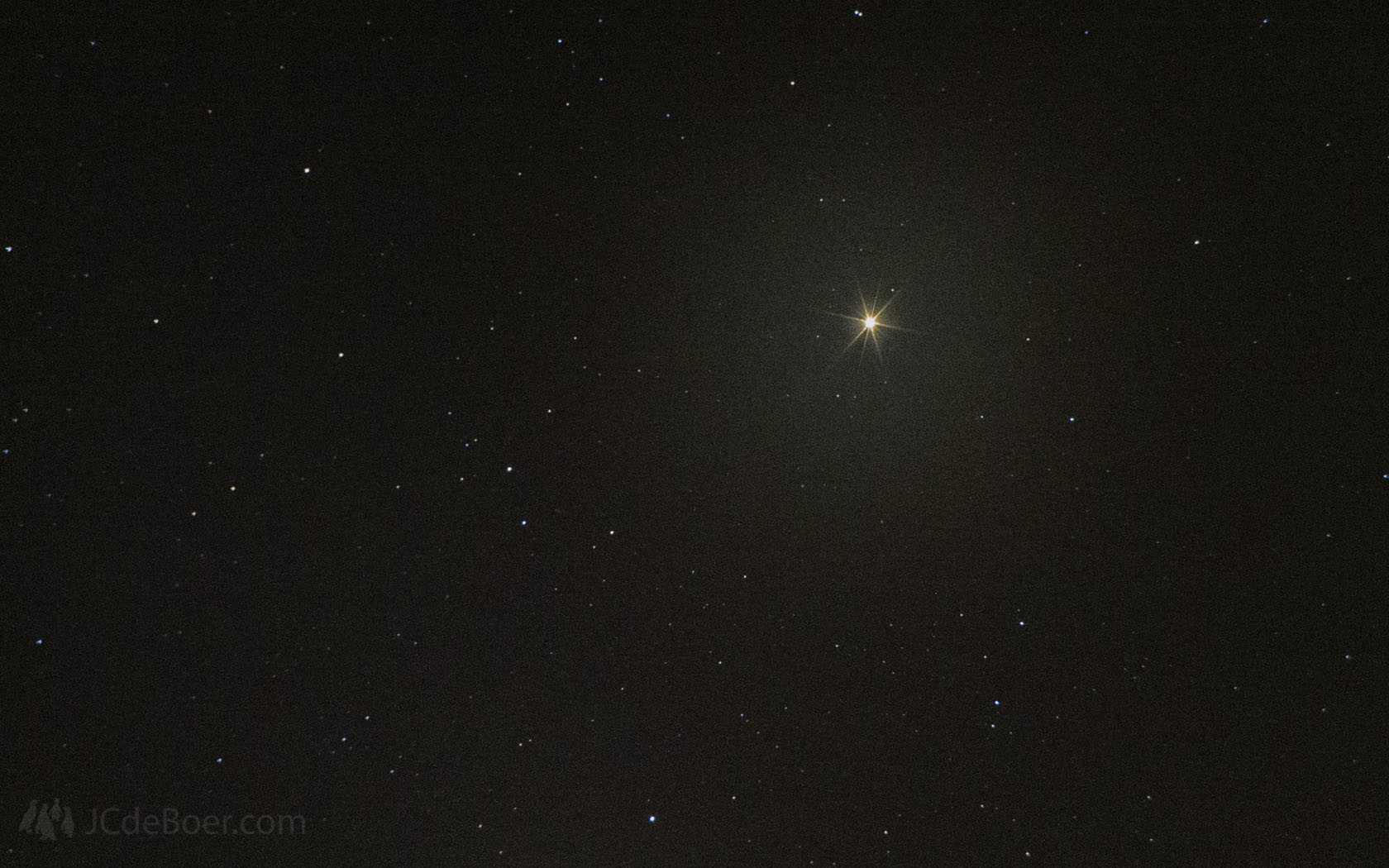
As a first star to try the system on, I chose Betelgeuse, a very bright, red supergiant. The system picked up the star and kept it in place for about 15 seconds. After that, it seemed to make one misstep and then lose the star. I will have a look at the settings and lower the step size to prevent overshooting while making corrections.

Luckily, I seemed to have aligned the telescope pretty well, so that the error was small enough for 10-15 second exposures without trailing. So without the feedback system, I could still make some reasonable photos. The first image is a single 10 second exposure of Betelgeuse and the stars around it.

First long exposure telescope image. The bright red supergiant Betelgeuse was my first target.

First long exposure telescope image. The bright red supergiant Betelgeuse was my first target.

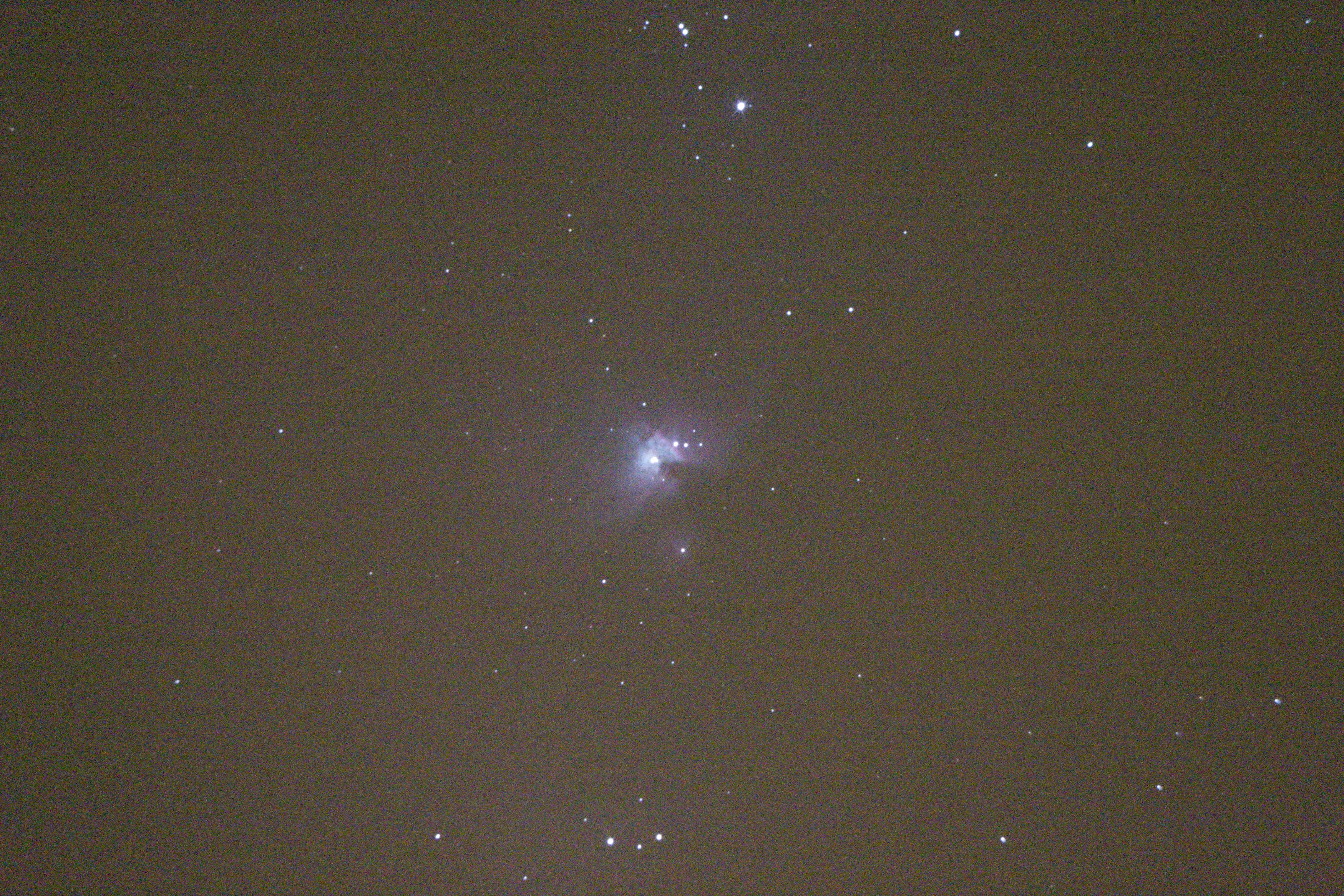
After that, I spend some time trying to find the Orion Nebula. This was quite a hastle since I couldn’t really see it, or the surrounding stars and I had to guess its exact location. Yes it was that clouded. Eventually, I found it and took a large amount of 10 second photos which looked like this:

Jpeg of raw 10 second image

Jpeg of raw 10 second image

Using 16 of those frames and stacking them together with 8 dark frames (photos with the lens cap on, to measure the noise induced by the camera temperature), I got the following result, which I’m quite pleased with 🙂

M42; Great Nebula in Orion. A stack of 16 10sec frames at iso 6400

M42; Great Nebula in Orion. A stack of 16 10sec frames at iso 6400

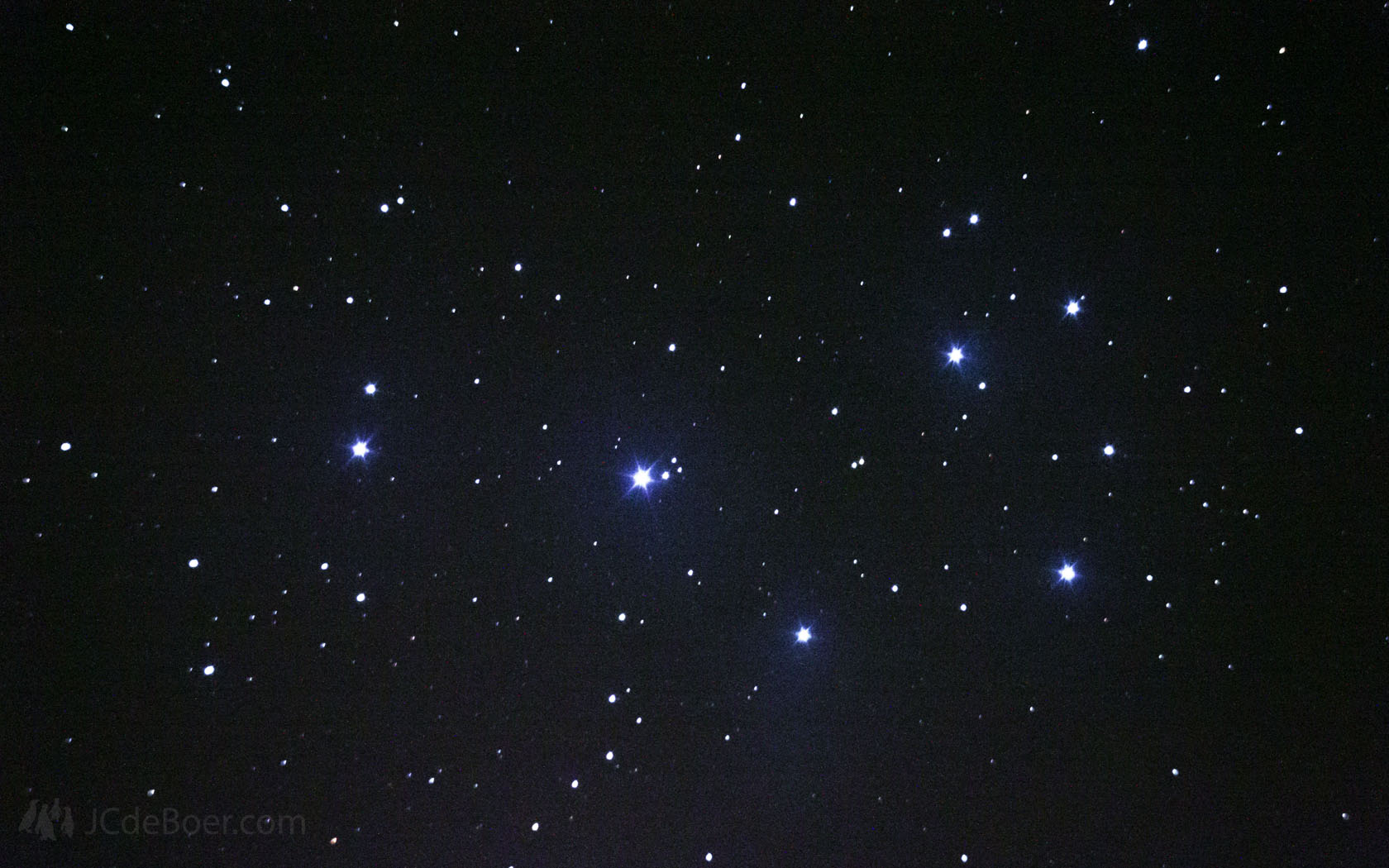
I sure have seen much better images, but considering that my guiding wasn’t working yet, the orion nebula being very low above the horizon and the layer of clouds present, this image is very acceptable. Because by then, it was already late and the skies weren’t that clear anyway, I decided to try one last target and call it a night. The target I chose was M45; the Pleiades open cluster with its blue glowing stars. The image below is a single 20 second frame which I processed a little. The glow if visible due the the gas that surrounds the stars and reflects the blue light. This type of ‘nebulosity’ is called a reflextion nebula. In contrast, the Orion nebula is an emission nebula, that gets its glow from very hot gas that actually emits light.

M45; Pleiades open cluster. A single 10 second frame at iso 6400

M45; Pleiades open cluster. A single 20 second frame at iso 6400

All in all, this was a rather large post. I do intend to post more frequently the upcoming months, but as always, it really depends on the weather 🙂